In today’s hyper-competitive business landscape, the right CRM can be your ultimate game-changer. Discover the best enterprise CRM solutions that empower scalability, intelligence, and seamless customer engagement.
What Makes a CRM Truly ‘Enterprise-Grade’?

Not all CRMs are built to handle the complexity of large-scale operations. Enterprise CRM systems go beyond basic contact management—they integrate deeply with complex workflows, support thousands of users, and scale across global markets. These platforms offer advanced automation, robust security, AI-driven analytics, and extensive customization to meet the dynamic needs of large organizations.

Scalability and Global Reach
Enterprise businesses operate across regions, time zones, and regulatory environments. A top-tier CRM must support multi-language, multi-currency, and region-specific compliance features like GDPR or CCPA. Scalability ensures the system grows with your business, whether you’re adding new departments, subsidiaries, or international branches.
- Supports 10,000+ concurrent users
- Cloud-native architecture for elastic scaling
- Global data center deployment for low-latency access
Advanced Security and Compliance
Data security is non-negotiable at the enterprise level. The best enterprise CRM solutions offer end-to-end encryption, role-based access control, audit trails, and compliance certifications such as SOC 2, ISO 27001, and HIPAA. These features protect sensitive customer data and ensure adherence to industry regulations.
“A breach in CRM data can cost millions—not just in fines, but in lost customer trust.” — Gartner, 2023
Deep Integration Capabilities
Enterprises rely on a vast ecosystem of tools—ERP, marketing automation, HRIS, and supply chain systems. The best enterprise CRM solutions provide native integrations or robust APIs to connect seamlessly with platforms like SAP, Oracle, Microsoft Dynamics, and Salesforce. This ensures data consistency and eliminates silos.
For example, Salesforce Sales Cloud offers over 3,000 pre-built integrations, making it one of the most connected CRMs in the market.
Top 7 Best Enterprise CRM Solutions in 2024
After rigorous evaluation based on functionality, scalability, user experience, and ROI, we’ve identified the seven most powerful CRM platforms for enterprise use. These are not just tools—they are strategic assets that drive revenue, improve customer retention, and streamline operations.
1. Salesforce Sales Cloud
Salesforce remains the undisputed leader in the CRM space, especially for large organizations. Its Sales Cloud is engineered for complex sales cycles, offering AI-powered forecasting, lead scoring, and pipeline management. With Einstein AI, it predicts deal outcomes and recommends next steps.
- AI-driven insights with Salesforce Einstein
- Highly customizable with Lightning Platform
- Extensive AppExchange marketplace for add-ons
Salesforce integrates with virtually every major enterprise system and offers industry-specific editions for financial services, healthcare, and manufacturing. Its global support network and continuous innovation make it a top choice among the best enterprise CRM solutions.
2. Microsoft Dynamics 365
For organizations already embedded in the Microsoft ecosystem, Dynamics 365 offers a seamless blend of CRM and ERP functionalities. It excels in sales, customer service, and field service management, with deep integration into Office 365, Azure, and Power BI.
- Tight integration with Outlook, Teams, and Excel
- Powerful AI and analytics via Azure Cognitive Services
- Flexible deployment: cloud, on-premise, or hybrid
Dynamics 365 is particularly strong in verticals like retail and logistics. According to Microsoft’s official site, over 30,000 enterprises use Dynamics 365 to unify customer data and automate workflows.
3. HubSpot Enterprise CRM
While HubSpot started as a SMB-focused platform, its Enterprise tier now rivals legacy systems. It offers a unified CRM with marketing, sales, service, and content hubs—all on a single database. Its strength lies in user-friendliness and inbound methodology.
- Free CRM core with paid enterprise upgrades
- Advanced reporting and custom objects
- AI-powered content generation and email suggestions
HubSpot’s Enterprise CRM is ideal for companies focused on inbound growth. It supports up to 1 million records and offers SSO, audit logs, and SLA-backed support. Learn more at HubSpot CRM.
4. Oracle CX Sales
Oracle’s Customer Experience (CX) suite is built for large, data-intensive enterprises. CX Sales leverages machine learning to provide real-time guidance, forecasting accuracy, and account insights. It integrates tightly with Oracle ERP and HCM, making it a favorite in finance-heavy industries.
- Adaptive intelligence for sales recommendations
- Embedded social collaboration tools
- Comprehensive CPQ (Configure, Price, Quote) engine
Oracle’s strength is in handling complex product configurations and global pricing models. It’s used by Fortune 500 companies like Accenture and FedEx. Explore Oracle CX at Oracle CX Sales.
5. SAP Customer Experience
SAP’s CRM offering is part of its broader Customer Experience suite, including C/4HANA. It’s designed for global enterprises with complex supply chains and omnichannel customer engagement needs. SAP excels in B2B sales and service automation.
- End-to-end customer journey mapping
- Real-time analytics with SAP HANA
- Integration with SAP S/4HANA ERP
SAP’s solution is particularly strong in manufacturing and automotive sectors. It supports multi-brand management and global loyalty programs. Visit SAP Customer Experience for details.
6. Zoho CRM Plus (Enterprise Edition)
Zoho has evolved from a budget-friendly option to a full-fledged enterprise contender. Zoho CRM Plus bundles CRM with sales, marketing, support, and analytics tools. Its AI assistant, Zia, offers predictive forecasting and sentiment analysis.
- Unlimited custom modules and fields
- Multi-channel communication (email, phone, social)
- Advanced workflow automation with Blueprint
Zoho’s pricing is highly competitive, making it attractive for mid-to-large enterprises looking for value. It supports private cloud deployment and offers GDPR compliance. Learn more at Zoho CRM.
7. Adobe Experience Cloud (with Marketo Engage)
While not a traditional CRM, Adobe Experience Cloud—powered by Marketo Engage and integrated with Microsoft Dynamics or Salesforce—delivers unparalleled customer experience management. It’s ideal for enterprises focused on digital marketing and personalization.
- AI-driven content personalization
- Real-time customer journey orchestration
- Advanced A/B testing and attribution modeling
Adobe’s strength lies in data-driven marketing at scale. It processes billions of data points daily to deliver hyper-personalized experiences. Used by brands like IBM and Spotify, it’s a key player among the best enterprise CRM solutions when combined with a core CRM.
Key Features to Look for in Best Enterprise CRM Solutions
Choosing the right CRM isn’t just about brand names—it’s about aligning features with your business goals. The best enterprise CRM solutions share a set of core capabilities that differentiate them from mid-market tools.
AI and Predictive Analytics
Modern enterprise CRMs leverage artificial intelligence to automate tasks, predict customer behavior, and optimize sales pipelines. Features like lead scoring, churn prediction, and sentiment analysis help teams act proactively.
- Einstein AI (Salesforce)
- Dynamics 365 AI for Sales
- Zia AI (Zoho)
According to a 2023 Salesforce report, companies using AI in CRM see a 30% increase in sales productivity.
Workflow Automation and Process Management
Enterprises deal with complex, multi-step processes. The best enterprise CRM solutions offer visual workflow builders, approval chains, and robotic process automation (RPA) to reduce manual work.
- Drag-and-drop automation designers
- Conditional logic and triggers
- Integration with RPA tools like UiPath
Automation not only saves time but also ensures compliance and consistency across teams.
Customization and Extensibility
No two enterprises are alike. The best enterprise CRM solutions allow deep customization—custom objects, fields, UI layouts, and business logic. They also support low-code/no-code development for rapid innovation.
- Custom apps and modules
- API-first architecture
- Developer sandboxes and CI/CD pipelines
“Flexibility is the hallmark of enterprise readiness.” — Forrester Research, 2024
Integration Ecosystems: Why They Matter in Best Enterprise CRM Solutions
A CRM is only as powerful as its connections. The best enterprise CRM solutions act as central hubs, integrating with ERP, marketing, HR, and customer support systems to create a single source of truth.
ERP and Financial System Integration
Seamless sync between CRM and ERP systems ensures that sales orders, inventory levels, and billing data are always up to date. This is critical for accurate forecasting and customer satisfaction.
- Salesforce + SAP ERP
- Dynamics 365 + Oracle NetSuite
- Zoho CRM + Zoho Books
For example, integrating Salesforce with SAP allows real-time order tracking and credit checks, reducing fulfillment errors by up to 40%.
Marketing and Email Automation
Enterprise marketing teams need CRMs that sync with platforms like Marketo, HubSpot, or Adobe Campaign. This enables personalized campaigns based on CRM data like purchase history and engagement levels.
- Behavioral triggers from CRM data
- Unified customer profiles
- Cross-channel campaign management
Such integrations boost campaign ROI by ensuring relevance and timing.
Customer Support and Service Platforms
The best enterprise CRM solutions integrate with service desks like Zendesk, ServiceNow, or Salesforce Service Cloud. This allows agents to access full customer histories, reducing resolution time and improving satisfaction.
- Case management from CRM records
- Live chat and knowledge base integration
- SLA tracking and escalation rules
According to Gartner, integrated CRM and service platforms reduce average handling time by 25%.
Total Cost of Ownership (TCO) for Best Enterprise CRM Solutions
While upfront licensing costs are visible, the true expense of a CRM lies in implementation, training, customization, and maintenance. Understanding TCO is crucial when evaluating the best enterprise CRM solutions.
Licensing and Subscription Models
Most enterprise CRMs use per-user, per-month pricing. However, costs can escalate quickly with add-ons like AI, advanced analytics, or industry-specific modules.
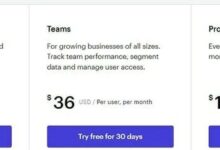
- Salesforce: $300+/user/month (Enterprise Edition)
- Dynamics 365: $225/user/month (Sales Enterprise)
- HubSpot: $1,200/month (Enterprise, up to 10 users)
Some vendors offer volume discounts or enterprise agreements for large deployments.
Implementation and Consulting Fees
Implementation can cost 2–5x the annual license fee, depending on complexity. This includes data migration, workflow design, integration, and testing.
- Average Salesforce implementation: $100,000–$500,000+
- Dynamics 365: $75,000–$300,000
- Consulting partners: Accenture, Deloitte, Infosys
Choosing a certified implementation partner is critical to avoid costly delays.
Ongoing Maintenance and Upgrades
Enterprises must budget for annual upgrades, user training, and technical support. Cloud CRMs reduce infrastructure costs but require continuous optimization.
- Annual maintenance: 15–20% of license cost
- Internal CRM admin team or MSP
- Regular audits for data hygiene and security
“The cheapest CRM can become the most expensive if poorly implemented.” — McKinsey & Company
User Adoption and Training Strategies for Best Enterprise CRM Solutions
Even the most powerful CRM fails if users don’t adopt it. Studies show that poor user adoption is the #1 reason for CRM project failure.
Change Management and Leadership Buy-In
Successful CRM rollouts start at the top. Executive sponsorship ensures alignment, funding, and accountability. Leaders must model CRM usage and communicate its strategic value.
- Appoint a CRM champion or steering committee
- Link CRM usage to performance metrics
- Host regular town halls and feedback sessions
According to PwC, projects with strong executive support are 3x more likely to succeed.
Role-Based Training Programs
One-size-fits-all training doesn’t work. The best enterprise CRM solutions require tailored programs for sales reps, managers, marketers, and support agents.
- Interactive e-learning modules
- Live workshops and sandbox environments
- Just-in-time learning (short videos, FAQs)
HubSpot Academy and Salesforce Trailhead offer free, role-specific training that boosts proficiency.
Continuous Feedback and Optimization
Adoption isn’t a one-time event. Regular feedback loops help identify pain points and drive iterative improvements.
- Monthly user surveys
- In-app feedback tools
- Usage analytics to spot underutilized features
Companies like Cisco use gamification—badges, leaderboards—to encourage consistent CRM use.
Future Trends Shaping the Best Enterprise CRM Solutions
The CRM landscape is evolving rapidly. The best enterprise CRM solutions are not just keeping up—they’re leading the charge in innovation.
AI-Powered Hyper-Personalization
Future CRMs will deliver real-time, context-aware recommendations. Imagine a sales rep receiving AI-generated talking points moments before a client call, based on the customer’s recent social activity and support tickets.
- Dynamic content generation
- Emotion detection from voice and text
- Predictive next-best-action engines
Salesforce’s Einstein GPT and Microsoft’s Copilot are early examples of this shift.
Composable CRM and Microservices
Enterprises are moving away from monolithic platforms toward composable CRM—using best-of-breed components (e.g., a separate marketing engine or service module) connected via APIs.
- Greater flexibility and faster innovation
- Reduced vendor lock-in
- Modular pricing and deployment
Gartner predicts that by 2026, 70% of new CRM implementations will be composable, up from 10% in 2023.
Customer Data Platforms (CDPs) Integration
The line between CRM and CDP is blurring. The best enterprise CRM solutions now include or integrate with CDPs to unify data from online, offline, and IoT sources into a single customer profile.
- Real-time identity resolution
- Consent and preference management
- Segmentation across 100+ attributes
Adobe Experience Platform and Salesforce Customer Data Platform are leading this convergence.
What is the best enterprise CRM for large sales teams?
Salesforce Sales Cloud is widely regarded as the best enterprise CRM for large sales teams due to its advanced pipeline management, AI-driven forecasting, and extensive customization options. It supports complex sales processes and integrates seamlessly with other enterprise systems.
How much does an enterprise CRM cost?
Enterprise CRM costs vary widely. Licensing can range from $200 to $500+ per user per month. Total cost, including implementation and consulting, can reach $500,000+ for large deployments. Ongoing maintenance typically adds 15–20% annually.
Can small businesses use enterprise CRM solutions?
While possible, enterprise CRMs are often overkill for small businesses due to cost and complexity. However, platforms like HubSpot and Zoho offer scalable tiers that can grow with a business, making them viable long-term investments.
What is the most user-friendly enterprise CRM?
HubSpot Enterprise CRM is considered the most user-friendly, thanks to its intuitive interface, drag-and-drop builders, and comprehensive onboarding resources like HubSpot Academy. Microsoft Dynamics 365 also scores high for users already familiar with Office 365.
Which CRM has the best AI features?
Salesforce Einstein and Microsoft Dynamics 365 AI are leaders in AI-powered CRM features. Salesforce offers predictive lead scoring, automated data entry, and sentiment analysis, while Dynamics 365 provides AI insights for sales, customer service, and marketing.
Choosing the best enterprise CRM solutions is a strategic decision that impacts every customer-facing function. From Salesforce’s dominance to HubSpot’s usability and SAP’s integration depth, the right platform depends on your industry, scale, and goals. Consider not just features and cost, but also user adoption, integration needs, and future trends like AI and composable architecture. The best CRM isn’t just a tool—it’s a competitive advantage.
Best Enterprise CRM Solutions – Best Enterprise CRM Solutions menjadi aspek penting yang dibahas di sini.
Recommended for you 👇
Further Reading:
